
Hello!
Two Fridays ago, I wrapped up my first semester at SHBT! Overall, it was a busy but very fun semester, and I’m excited to share my reflections here today 🙂
My semester primarily consisted of three classes and a lab rotation with Massachusetts General Hospital (MGH) Voice Center. The three classes were:
- Speech and Hearing Lab Visits (SHBT 301QC)
- From Sound to Neuron (SHBT 201)
- Physics in the 20th Century (MIT 8.225)
I’ll split this reflection into two or three different blog posts! This first one focuses on the laboratory experiences.
Lab Rotations at SHBT
First-years at SHBT complete 2-4 lab rotations, each lasting up to four months to get a feel for different lab environments. At the end, we choose one lab to commit to for the rest of our PhD.
To help us choose our rotations, the “class” SHBT 301QC organizes 1-3 laboratory tours every Thursday. It was a fascinating experience running all over Boston to visit the city’s major medical hubs! I can’t share too much, but we got to see songbirds, advanced imaging techniques, and even try out virtual reality devices. I never thought I’d be interested in wet-lab molecular biology research, but thanks to these visits, my spring semester rotation will be exactly that. 🔬
Side note: SHBT has approximately 50 faculty involved. One of our sister programs, Biological and Biomedical Sciences (BBS), has on the order of 700 faculty! How does one even choose which labs to rotate with? Wow.
MGH Voice Center
My first rotation ran from mid-August to mid-December at the Massachusetts General Hospital (MGH) Voice Center, under PI Dr. Daryush Mehta, an SHBT alumnus who studies diagnostic methods for voice disorders.
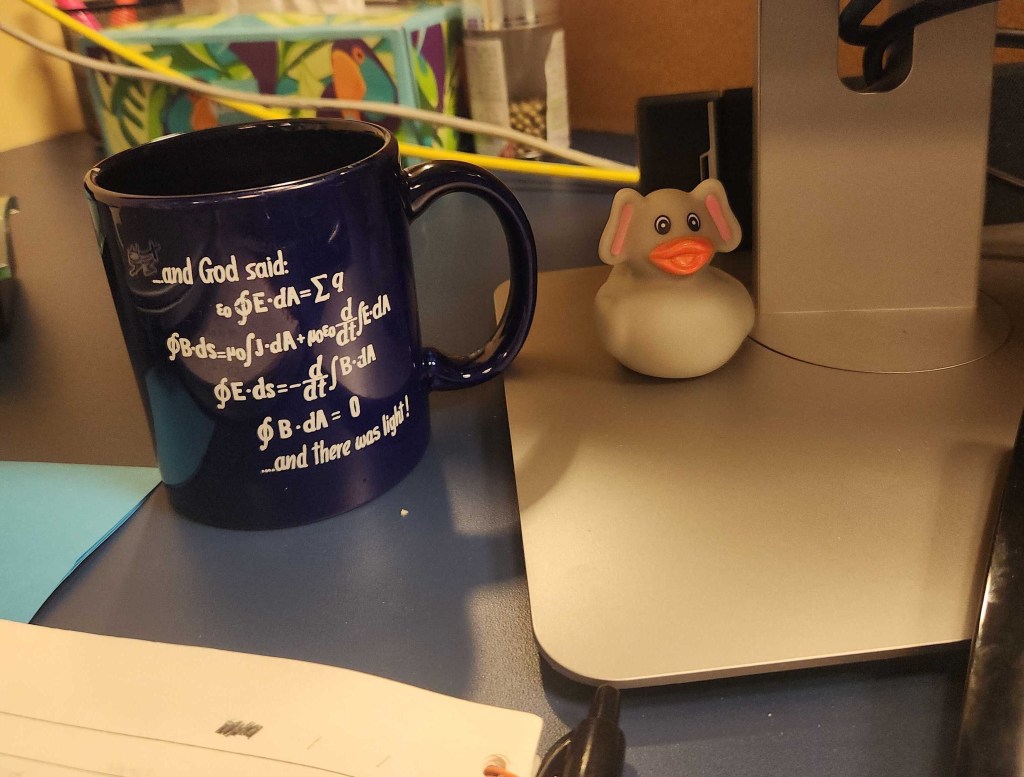
I still remember one moment from my first week that left me in shock regarding my new work environment. I was eating lunch in the lab kitchen when a laryngeal surgeon sat down next to me. A surgeon! I don’t think I had ever imagined myself working so closely with medical professionals, let alone surgeons…
Beyond that initial shock, I’m incredibly grateful that this was my first rotation experience. At the time, I wasn’t very well-versed in academia, but my weekly 1-1s with Daryush were very helpful. In the beginning, he sent me papers outlining the history of his lab’s research, which have greatly shaped how I think about scientific writing, especially the significance of data visualization. Daryush loves figures, and it’s clear in his papers; I had never seen such creative and informative figures before! After reading many of these papers, I went back to my former PI and asked if I could revise my master’s paper to rethink its figures.
I also learned a lot about the logistics of funding, which is especially a hot topic these days due to the recent funding crisis. Just in case, I applied to a few fellowships (similar to scholarships for graduate school) this semester, but I was confused about the NIH F31 fellowship that many students apply for. If the F31 exists, how come we can only commit to labs with guaranteed funding? Turns out that the F31 only covers about 70% of the PhD, and the remaining 30% cannot come from other NIH grants. As a result, some professors have to discourage their students from the F31 if they don’t have sufficient non-NIH funding sources, while other professors find the F31 helpful.
When I got rejected from one of the fellowships, I messaged my PI with the update. He immediately came out of the office to say, “I’m sorry Jan, it’s their loss.” I lowkey teared up at those simple words. It really hit me how much my mentors believe in my abilities as a scientist. With such support, I don’t need to be anxious about funding! 😀
It was also very encouraging that Daryush, like me, made the pivot from electrical engineering to medical research. At first, I was nervous about joining an interdisciplinary team that includes both engineers and speech-language pathologist (SLP) clinicians, but watching their collaboration helped me warm up to clinical research. I remember watching the clinicians in awe as they recruited patients and collected data, carefully accounting for clinical factors that I never would’ve considered as an engineer. Meanwhile, the clinicians were trusting us engineers to analyze the data that they’ve collected to learn more about how to diagnose or treat patients. This rotation has definitely helped me see the value of engineers working in the medical field.
I won’t share about my specific research here, but I can share that the lab had asked me to help with a bug in their workflow that they hadn’t figured out. I identified the issue early on, but it took the rest of the semester to fully implement the solution. Seeing my work pushed to the repository on my final day was a very satisfying way to end the rotation 🥳
On my last Wednesday, the team had planned my farewell breakfast, but I had to cancel due to a trip to the emergency room for a nasty ear infection 🙁 Upon hearing the news, my PI offered to drive me to the hospital, and my lab members checked in on me throughout the day. It was so sweet; I truly did make valuable connections in this lab during my short time here. We were able to make up for it with lunch at Anna’s Taqueria that Friday!
From a research perspective, it’s been a wonderful experience at the Voice Center, and I feel that I’ve made meaningful growth as an academic. I will miss the team a lot, thank you MGHVC for a great semester ♥️ In my next blog post, I will talk about my classwork and other highlights from the semester! Toodaloooooo
Credit to Adeline for proofreading with wonderful suggestions! ☺️


 The Zeeman Effect
Leave a comment